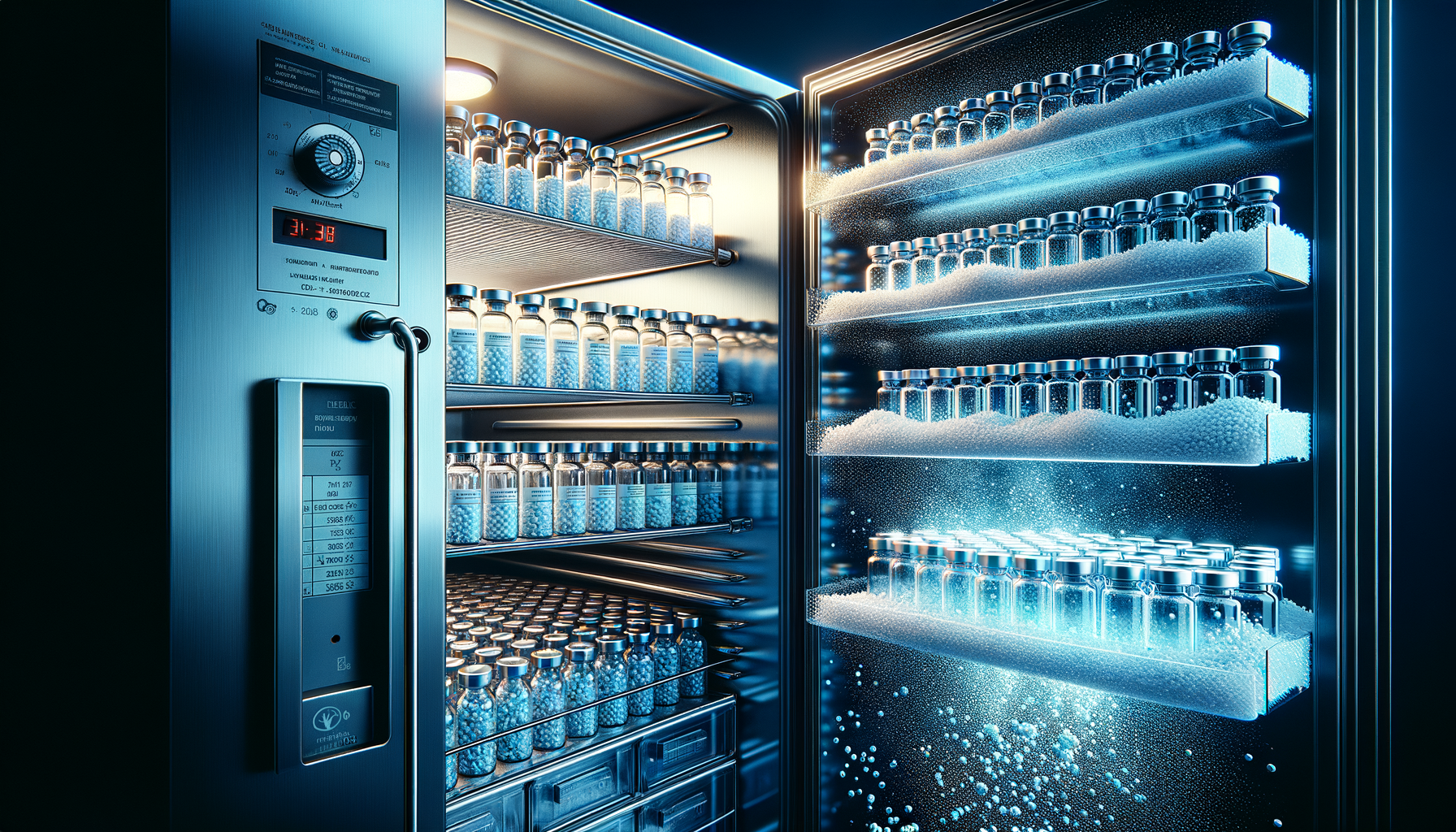
How Long Can You Refrigerate Peptides? A Researcher's Complete Storage Guide
If you work with research-grade peptides, you already know that proper storage is not optional — it is the difference between a viable compound and a degraded one. One of the most common questions researchers ask is: how long can you refrigerate peptides before they lose integrity? The answer depends on several key factors, including whether the peptide is lyophilized or reconstituted, the storage temperature, and the specific peptide sequence involved.
This guide breaks down everything you need to know to protect your peptide investment and maintain research-grade quality from the moment your order arrives.
Lyophilized vs. Reconstituted: Why the Distinction Matters
Before discussing timeframes, it is essential to understand the two primary states in which research peptides exist: lyophilized (freeze-dried) and reconstituted (in solution). Each has a dramatically different shelf life under refrigeration, and confusing the two is one of the most common storage mistakes researchers make.
Lyophilized Peptides
Lyophilized peptides are in a dry powder form, with moisture removed to dramatically slow chemical degradation. In this state, most peptides are significantly more stable. When stored correctly, lyophilized peptides can maintain their integrity for varying periods depending on storage conditions:
- At room temperature (20-25°C): Generally stable for a few weeks, though this is not recommended for long-term storage.
- Refrigerated (2-8°C): Most lyophilized peptides remain stable for 3 to 6 months under proper refrigeration.
- Frozen (-20°C): Storage at -20°C can extend stability to 12 to 24 months or longer for many peptides.
- Ultra-frozen (-80°C): Reserved for highly sensitive peptides or long-term archival purposes, potentially extending stability several years.
Research suggests that repeated freeze-thaw cycles are one of the leading causes of peptide degradation, even in lyophilized form. Always aliquot your peptides into single-use portions before freezing if you plan to access them multiple times.
Reconstituted Peptides in Solution
Once a peptide has been reconstituted with bacteriostatic water or another appropriate solvent, the clock moves considerably faster. In solution, peptides are exposed to hydrolysis, oxidation, and microbial activity — all of which can compromise integrity.
- Refrigerated (2-8°C): Most reconstituted peptides should be used within 7 to 30 days. More sensitive peptides, such as those with disulfide bonds or complex tertiary structures, may degrade faster.
- Frozen (-20°C): Some reconstituted peptides can be stored frozen, but this is peptide-specific. Studies indicate that freezing solutions containing certain carriers or stabilizers can cause aggregation and precipitation.
As a general rule, reconstitute only what you plan to use within a reasonable timeframe. This is one of the most practical habits any peptide researcher can adopt.
Which Peptides Are Most Sensitive to Storage Conditions?
Not all peptides degrade at the same rate. The amino acid composition and structural complexity of a peptide play a significant role in its stability. Here is what research suggests about some commonly studied peptides:
- BPC-157: Research indicates this peptide is relatively stable in solution compared to others, but refrigeration within the 2-8°C range is still strongly recommended after reconstitution. Bpc 157
- TB-500 (Thymosin Beta-4 fragment): Studies suggest TB-500 maintains reasonable stability when refrigerated post-reconstitution, though lyophilized storage remains preferred for anything beyond two weeks.
- CJC-1295: As a growth hormone-releasing hormone analogue, CJC-1295 is moderately stable when refrigerated, though its DAC (Drug Affinity Complex) variant may have different stability characteristics than the non-DAC version.
- Ipamorelin: Generally considered stable under refrigeration for several weeks post-reconstitution when bacteriostatic water is used as the solvent.
- GHK-Cu: This copper peptide is particularly sensitive to oxidation. Research suggests keeping it away from light and air exposure. Use amber vials where possible.
- Epithalon: Considered relatively stable, but as with all tetrapeptides, maintaining cold chain integrity is important.
Best Practices for Peptide Refrigeration
Proper refrigeration goes beyond simply placing your vials in the fridge. Here are the research-backed best practices that should guide your storage protocol:
1. Maintain a Consistent Temperature
Fluctuating temperatures accelerate degradation. Avoid storing peptides in the refrigerator door, where temperatures vary with each opening. The back of the refrigerator maintains the most consistent temperature.
2. Protect from Light
Many peptides are photosensitive. Store vials in their original dark packaging or wrap them in foil. Amber glass vials offer an additional layer of protection for reconstituted solutions.
3. Minimize Air Exposure
Oxygen is one of peptides' greatest enemies. After drawing from a reconstituted vial, ensure the septum reseals properly. Consider using parafilm around the vial cap for an extra barrier.
4. Use Bacteriostatic Water for Reconstitution
Bacteriostatic water — sterile water containing 0.9% benzyl alcohol — inhibits microbial growth and can extend the usability of reconstituted peptides compared to plain sterile water. Research indicates this can be a meaningful factor in maintaining solution integrity over time.
5. Label Everything
Always label vials with the peptide name, concentration, reconstitution date, and expiration estimate. This simple habit prevents costly errors in any research setting.
Signs Your Peptide May Have Degraded
Even with the best storage practices, it is important to recognize the warning signs that a peptide may no longer be viable for research purposes:
- Cloudiness or particulate matter in solution (peptides should be clear)
- Unusual color change (many peptides are colorless in solution)
- Unusual odor upon reconstitution
- Powder that appears clumped, discolored, or has visible moisture
If any of these signs are present, the sample should not be used for research. When in doubt, source a fresh, research-grade supply from a verified manufacturer.
Cold Chain Integrity During Shipping
Storage begins before the peptide even reaches your facility. A reputable peptide research supplier will ship products with appropriate cold packs and insulated packaging, particularly for reconstituted solutions. At Maxx Laboratories, we take cold chain integrity seriously — all orders are packed to maintain temperature stability during transit. About
Always inspect your shipment upon arrival and transfer peptides to appropriate storage conditions immediately.
Disclaimer: All products offered by Maxx Laboratories are intended for research purposes only and are not intended for human consumption, veterinary use, or any other application. These products have not been evaluated by any regulatory authority and are not intended to assessed, treat, prevent, or mitigate any condition or disease. All research must be conducted by qualified professionals in appropriate laboratory settings. Always consult a licensed healthcare provider before making any health-related decisions.