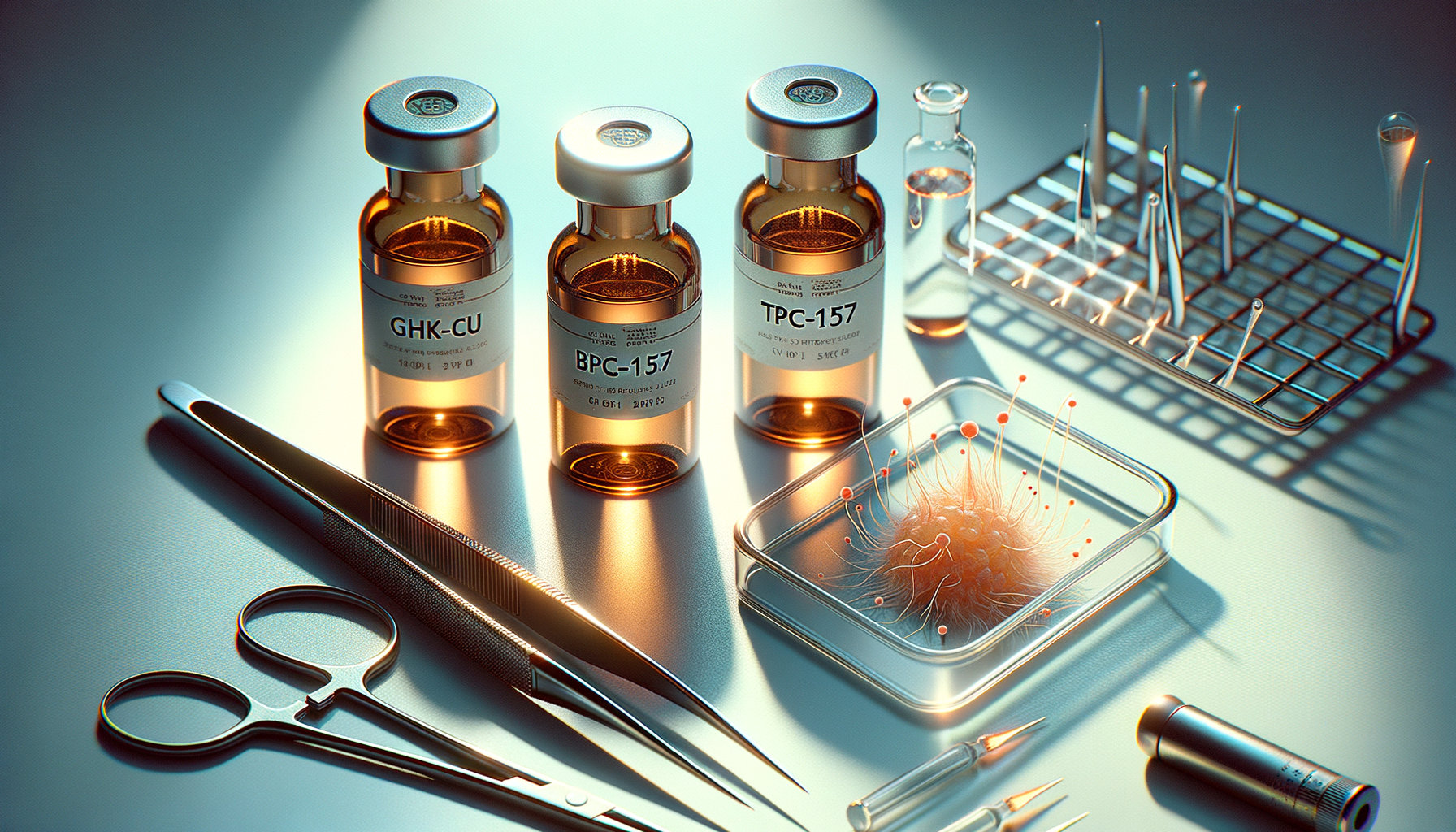
Why Researchers Are Looking at Peptides for Hair Loss
Hair loss affects an estimated 80 million people in the United States alone, yet conventional solutions remain limited in both effectiveness and tolerability. A growing body of preclinical and early-stage research is now examining a different avenue: peptides. These short-chain amino acid sequences play fundamental roles in cellular signaling, tissue regeneration, and growth factor stimulation — all processes directly relevant to hair follicle biology.
At Maxx Labs, we supply research-grade peptides studied for their potential effects on tissue repair and cellular regeneration. This article explores what current research suggests about several peptides frequently included in investigational hair regrowth protocols.
Understanding Hair Follicle Biology: The Research Foundation
Before diving into specific peptides, it helps to understand why follicle biology matters so much. Hair follicles cycle through three phases: anagen (active growth), catagen (transition), and telogen (rest/shedding). In androgenetic alopecia and other forms of hair loss, follicles progressively miniaturize and spend less time in the anagen phase.
Research suggests that peptides may influence this cycle by modulating growth factors such as VEGF (vascular endothelial growth factor), KGF (keratinocyte growth factor), and IGF-1 — all of which studies indicate are critical regulators of follicle activity and dermal papilla cell function.
GHK-Cu: The Copper Peptide at the Center of Hair Research
What Is GHK-Cu?
GHK-Cu (glycyl-L-histidyl-L-lysine copper complex) is a naturally occurring tripeptide first isolated from human plasma. It binds copper ions and has been extensively studied for its roles in wound healing, collagen synthesis, and anti-inflammatory activity. More recently, researchers have turned attention to its effects on scalp and follicle tissue.
What Research Suggests
A study published in the Archives of Dermatological Research found that GHK-Cu may stimulate hair follicle enlargement and extend the anagen phase in research models. Additional in-vitro studies indicate that GHK-Cu upregulates growth factors including VEGF and FGF-7 (fibroblast growth factor), both of which are associated with follicle vascularization and keratinocyte proliferation.
Research also suggests GHK-Cu may inhibit DHT-related signaling pathways at the follicle level — a mechanism of significant interest given that dihydrotestosterone (DHT) is widely considered a primary driver of follicle miniaturization in pattern hair loss models. Ghk Cu
BPC-157: Tissue Repair and Follicular Angiogenesis
The Case for BPC-157 in Hair Research
BPC-157 (Body Protection Compound-157) is a synthetic pentadecapeptide derived from a protective protein found in gastric juice. It is best known in research circles for its remarkable tissue-healing properties, but studies indicate its mechanism of action may also be relevant to hair follicle health.
BPC-157 has been shown in multiple animal model studies to significantly upregulate VEGF expression, promoting angiogenesis — the formation of new blood vessels. Since hair follicles are highly vascular structures, improved blood supply to the scalp and dermal papilla may support healthy follicle cycling, according to preclinical data.
A 2019 study highlighted BPC-157's ability to accelerate the healing of damaged vascular and connective tissue, and researchers have noted parallel implications for scalp tissue repair following inflammation-driven hair loss. Bpc 157
TB-500 (Thymosin Beta-4): Cellular Migration and Stem Cell Activation
TB-500 is the synthetic form of Thymosin Beta-4, a peptide naturally found in high concentrations in blood platelets and wound fluid. Its primary research focus has been tissue regeneration, but studies indicate it may also play a role in hair follicle stem cell activation.
Research published in the Journal of Investigative Dermatology found that Thymosin Beta-4 may promote the migration of stem cells to hair follicles, potentially reactivating dormant follicles during the telogen phase. TB-500 also appears to influence actin polymerization — a cellular process critical to keratinocyte migration and follicle reconstruction. Tb 500
Epithalon and DSIP: Supporting the Systemic Environment for Hair Health
Some researchers investigating hair loss take a broader systems-level approach, incorporating peptides that may support hormonal regulation and sleep quality — two factors research links to hair cycling. Epithalon, a tetrapeptide studied for its telomere-supportive and neuroendocrine-regulating properties, and DSIP (Delta Sleep-Inducing Peptide), researched for its effects on sleep architecture and cortisol modulation, are sometimes studied alongside topically focused peptides.
While direct evidence linking these peptides to hair regrowth is more limited, studies suggest that optimizing systemic factors such as cortisol levels and cellular aging may create a more favorable environment for follicle health and anagen phase extension.
A Research-Based Protocol Overview
Investigative protocols in published literature and academic research contexts often combine multiple peptides to address different aspects of hair follicle biology simultaneously. A conceptual multi-peptide approach studied in research settings may include:
- GHK-Cu — for follicle growth factor stimulation and potential DHT pathway modulation
- BPC-157 — for angiogenesis support and scalp tissue repair
- TB-500 — for stem cell migration and keratinocyte activity
- Epithalon or DSIP — for systemic neuroendocrine and cellular aging support
It is important to note that all research cited here reflects animal model or in-vitro findings. Human clinical data on peptide-based hair regrowth protocols remains an emerging area of study.
Quality and Purity: Why Research-Grade Matters
For any peptide research application, the integrity of the compound is paramount. Research-grade peptides should be synthesized using solid-phase peptide synthesis (SPPS) and verified for purity via high-performance liquid chromatography (HPLC) and mass spectrometry. At Maxx Labs, all products meet rigorous third-party testing standards to ensure researchers are working with accurately sequenced, high-purity compounds. Quality Testing
Disclaimer: All products offered by Maxx Labs (maxxlaboratories.com) are intended for in-vitro research and laboratory use only. They are not intended for human consumption, and no information in this article constitutes informational content. These products have not been evaluated by the Food and Drug Administration for safety or efficacy in humans. Always consult a qualified healthcare provider before making any decisions related to your health or wellness. Research findings cited reflect preclinical and in-vitro data and should not be interpreted as applicable to human outcomes.